

FREE 7-DAY CHALLENGE
Most People Never Realize Their Kitchen Habits Are Quietly Shaping Their Future
Join the free 7-Day Kitchen Upgrade Challenge and discover how small, intentional kitchen upgrades can quietly transform the way you cook, eat, and feel every day.

You'll get the free guide + simple daily upgrades delivered straight to your inbox.

Learn why the oil you cook with matters (and what most people miss)

Build healthier kitchen habits that actually fit real life

Make healthy cooking feel simpler, more enjoyable, and less overwhelming

Receive daily kitchen upgrades and practical tips in your inbox

Small kitchen upgrades can quietly transform the way you cook, eat, and feel every day.

The Oil You Cook With Matters.

FREE 7-DAY CHALLENGE
Most People Never Realize Their Kitchen Habits Are Quietly Shaping Their Future
Join the free 7-Day Kitchen Upgrade Challenge and discover how small, intentional kitchen upgrades can quietly transform the way you cook, eat, and feel every day.
You'll get the free guide + simple daily upgrades delivered straight to your inbox.
Learn why the oil you cook with matters (and what most people miss)
Build healthier kitchen habitsthat actually fit real life
Make healthy cooking feel simpler, more enjoyable, and less overwhelming
Receive daily kitchen upgrades and practical tips in your inbox
Small kitchen upgrades can quietly transform the way you cook, eat, and feel every day.
The Oil You Cook With Matters.
FREE 7-DAY KITCHEN UPGRADE CHALLENGE!

Friday, November 06, 2026
What Are Seed Oils? A Simple Guide
Seed oils are part of many familiar foods, but they're not all alike. Learn which oils belong to this group, how they're made, and what to consider when choosing the oil you cook with.
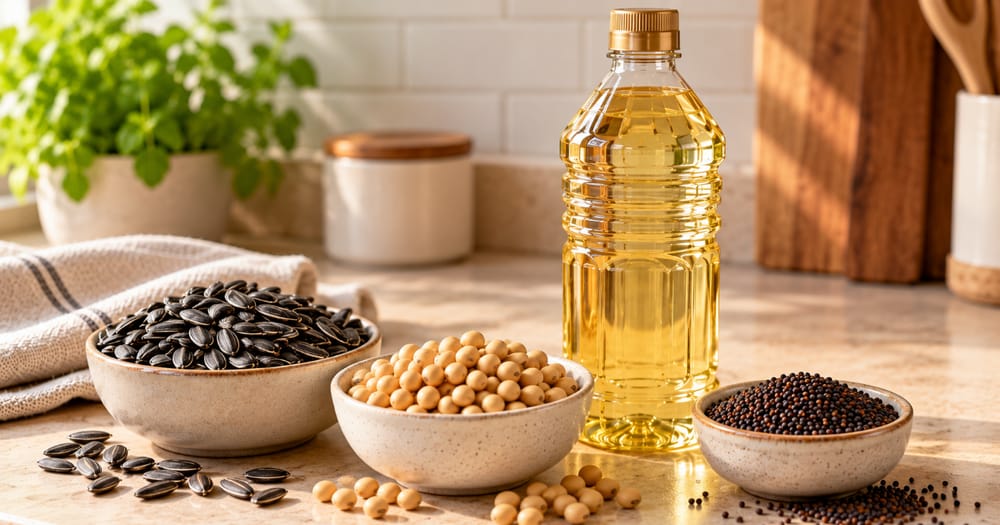
Seed oils are found in many of the foods we eat and cook with every day. But what exactly are they, why is everyone talking about them, and what should you know before choosing your next cooking oil?
Have you noticed how much people are talking about seed oils lately?
One person tells you to avoid them. Someone else says there's nothing to worry about.
And if you're simply trying to cook a good meal for yourself or your family, it can be difficult to know what to make of it all.
I think there's a better place to start.
Before deciding whether an oil belongs in your kitchen, it helps to know what it actually is, how it's made, and what makes it different from the other oils you could be using.
You might be surprised by how familiar some of these oils already are.

THE QUICK ANSWER
Seed oils are oils made from plant seeds and, in common cooking terminology, certain parts of grains. Common examples include soybean, canola, sunflower, safflower, corn, cottonseed, and grapeseed oil.
They're widely used in everyday cooking and packaged foods. But they don't all have the same fat composition or go through the same manufacturing process.

In This Guide
01. What Are Seed Oils?
02. Which Oils Are Seed Oils? A Simple List
03. Where Do Seed Oils Show Up in Everyday Food?
04. How Are Seed Oils Made?
05. Why Is Everyone Talking About Omega-6?
06. What About Cooking With Seed Oils?
07. What Should You Look for When Choosing a Cooking Oil?
08. What If You Want an Alternative to Seed Oils?
09. A Small Change in How You Choose
10. Frequently Asked Questions
01. What Are Seed Oils?
The name is pretty straightforward.
Sunflower oil comes from sunflower seeds. Soybean oil comes from soybeans. Canola oil comes from canola seeds
You'll also find corn oil and rice bran oil commonly included in this group, even though they come from particular parts of grains.
But there's something worth understanding: just because two oils come from seeds doesn't mean they're the same.
Their fat composition can be different. Their flavor can be different. Even the way they're made can be different.
And those details are much more useful than the category name alone.
02. Which Oils Are Seed Oils? A Simple List
You've probably seen most of these names at the grocery store or on the ingredients of foods you already buy.


Sesame, peanut, flaxseed, and pumpkin seed oils are other examples. So while these eight are frequently mentioned, they aren't the only oils made from seeds.
And yes, the ordinary vegetable oil you find in grocery stores is commonly made from soybean, canola, sunflower, or a blend of seed-derived oils.
The name vegetable oil is broader than seed oil, so the exact ingredients depend on the product.
So chances are you've been using seed oils for years without calling them that.
03. Where Do Seed Oils Show Up in Everyday Food?
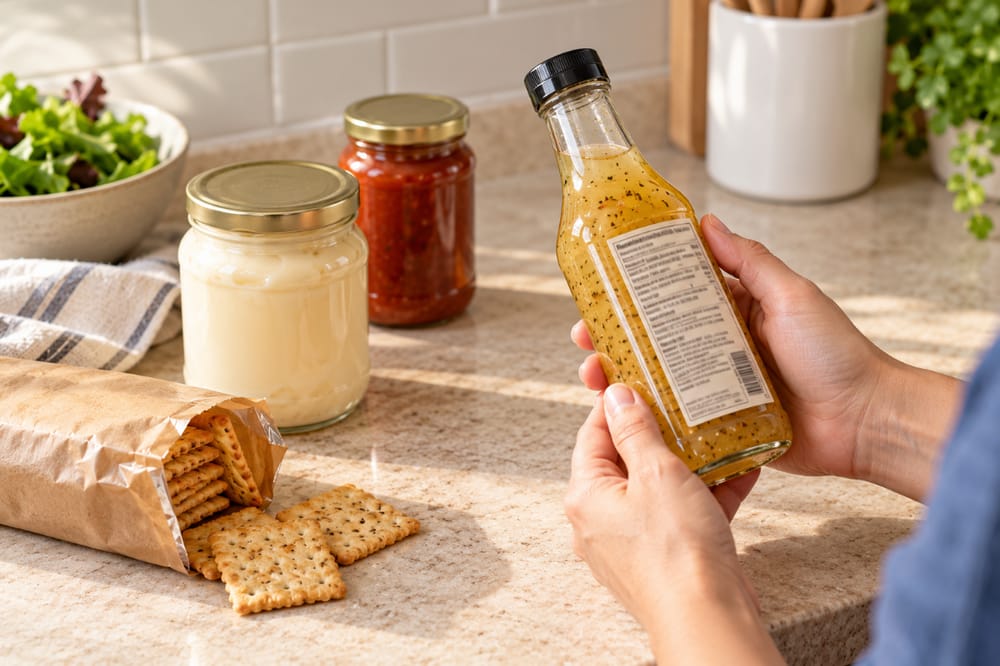
It's not just the bottle of cooking oil sitting beside your stove.
Seed oils are also commonly used in salad dressings, mayonnaise, crackers, packaged snacks, sauces, baked goods, and many prepared foods. They're used in restaurants and food manufacturing, too.
That doesn't mean every product in those categories contains seed oils. But once you know the common names, you'll probably start noticing them more often.
Take a jar of mayonnaise or a bottle of salad dressing, for example. The ingredients might include soybean oil, canola oil, sunflower oil, or a combination of oils.
Sometimes you'll see a broader declaration, such as:
Vegetable oil (soybean and/or canola)
The important thing is to look beyond the product's name and see which oils are actually listed.
Next time you're buying a dressing or sauce, turn the bottle around and look for those familiar oil names. It takes a few seconds, and you'll know a little more about what you're bringing home.
04. How Are Seed Oils Made?

You might imagine seeds being pressed until the oil comes out.
Sometimes that's how it's done.
But many commercially produced seed oils go through additional processing.
Some are mechanically pressed. Others are extracted using a solvent, often hexane, which helps recover oil from the seeds. That solvent is then separated during manufacturing.
After extraction, the oil may be refined to remove unwanted substances, lighten its color, and reduce its natural smell or flavor.
You may have heard the terms refined, bleached, and deodorized.
They sound complicated, but the basic idea is simple: manufacturers process the oil to give it the characteristics they want in the finished product.
Bleaching usually involves materials such as special clays, while deodorization uses steam and heat.
Not every seed oil is made this way. Some are pressed and undergo relatively little additional processing.
What matters is that the oil in the bottle may be quite different from the oil first extracted from the plant.
And when heat and several processing steps are involved, I think it's reasonable to want to know more aboutwhat you're buying.
05. Why Is Everyone Talking About Omega-6?
This is one of the biggest reasons seed oils have attracted so much attention.
Many conventional seed oils contain substantial amounts of omega-6, a type of polyunsaturated fat.
Omega-6 isn't something we need to eliminate completely. Our bodies need it, just as they need omega-3.
The question is how much we're getting and how those fats fit into our overall diet.
For example, soybean and corn oils contain considerable amounts of omega-6. Canola oil has a different balance and provides more plant-based omega-3 than corn oil.
Even sunflower oil can vary. A high-oleic variety contains much less omega-6 than conventional high-linoleic sunflower oil.
That's why two oils from seeds can have very different fat compositions.
So should we be concerned?
I think it's a question worth taking seriously.
Researchers have spent years looking at omega-6, omega-3, inflammation, and long-term health. Some studies have raised concerns about certain dietary patterns and health outcomes, while others have found different results.
It's also important to distinguish the amount of omega-6 in a food from the balance of omega-6 and omega-3 across an entire diet.
That's why I wouldn't tell you every seed oil is dangerous, or that there's absolutely nothing worth questioning.
What I do believe is that the kinds of fat we use regularly deserve attention.
And because cooking oil appears in so many meals, it's a sensible ingredient to take a closer look at.
You don't need to understand every fatty acid to start asking better questions about what you're eating.
06. What About Cooking With Seed Oils?
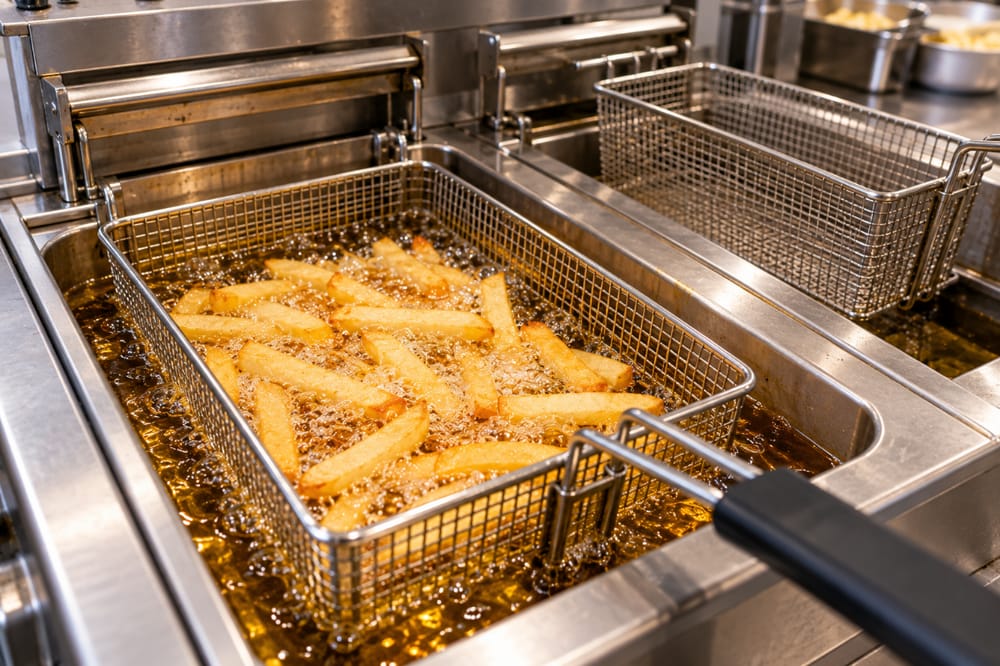
There's something else worth considering: how an oil behaves when you heat it.
You'll find oils such as canola, soybean, and sunflower used in everything from baking muffins and making dressings to sautéing vegetables and frying foods.
Think about gently cooking eggs in a skillet compared with using the same oil for repeated batches of deep-frying.
Those are very different situations.
All cooking oils can change when exposed to enough heat and oxygen. But some fats are more vulnerable to those changes than others.
Oils containing more polyunsaturated fats are generally more susceptible to oxidation during prolonged heating.
The way an oil was refined can matter too. Certain high-temperature processes can create unwanted compounds, which is one reason food-safety authorities pay attention to refining conditions.
Does that mean every seed oil is unsuitable for cooking? No.
But it does mean I'd want to consider what the oil contains and what I'm planning to cook, rather than assuming every bottle works equally well for everything.
07. What Should You Look for When Choosing a Cooking Oil?
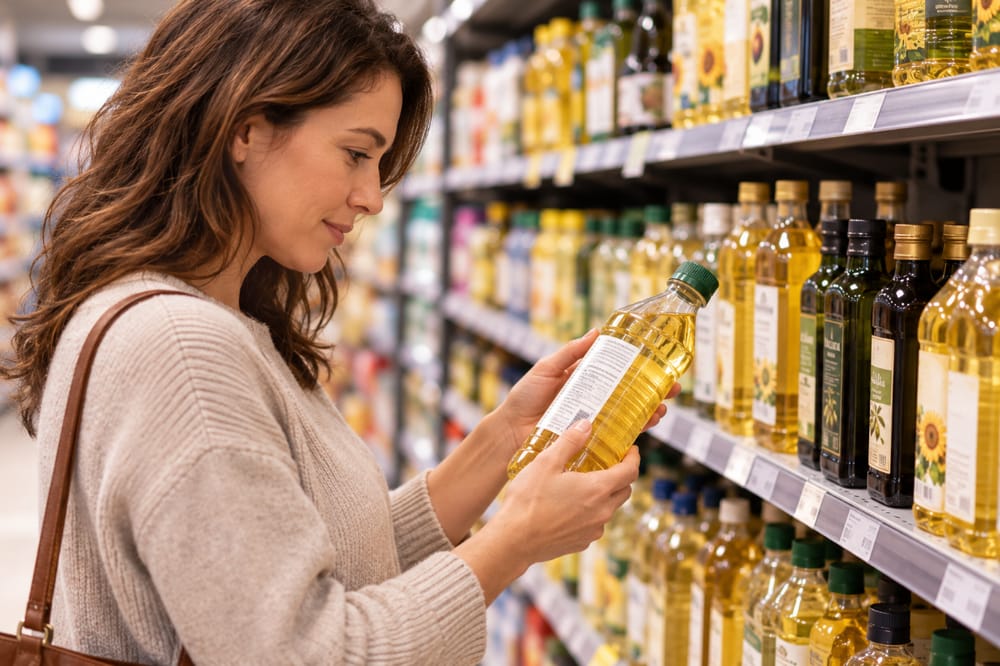
You don't need to turn grocery shopping into a science project.
I'd begin with the oil you use most often.
Find out what plant it comes from. Check whether it's refined or pressed, if the information is available. And consider whether it suits the meals you usually make.
The ingredients on the bottle are a useful starting point, although they won't always tell you everything about its fat composition or how it was produced.
If you want to know more, look at the manufacturer's product information.
And perhaps you'll find yourself asking a simple question:
Is this still the oil I want to use every day, or would something different suit my kitchen better?
There's no need to replace every ingredient you own. Just understanding your options is a good place to begin.
08. What If You Want an Alternative to Seed Oils?
If you're interested in cooking with something different, there are several oils worth exploring.
Olive oil, avocado oil, and coconut-derived oils are generally discussed separately from the common commercial seed-oil category. They have different fat compositions and can play different roles in the kitchen.
That's one reason I think our Coco-Nuts Liquid Coconut is worth knowing about.
Its composition is quite different from conventional soybean or corn oil. It contains 92.87% medium-chain triglycerides (MCTs) and virtually no omega-6.
But composition is only part of choosing an everyday cooking oil. It also needs to work with the meals you enjoy.
Liquid Coconut stays pourable, even in the refrigerator. It has a subtle, light coconut taste and works well for low-to-medium-heat cooking, suitable baking, homemade dressings, and marinades.
You can use it for scrambled eggs, gently sautéed vegetables, or a simple muffin recipe without having to melt it first.
It's not about making every recipe with the same oil. It's about finding an option that makes sense for the way you cook.
If you're curious, you can learn more about Coco-Nuts Liquid Coconut and see whether it could fit into your kitchen.
09. A Small Change in How You Choose
You probably don't think about cooking oil nearly as much as the other ingredients you put into a meal.
But it's something you may use again tomorrow, and the day after that.
Now that you know what seed oils are, where they're found, how they're made, and why their composition matters, you have a little more information to work with.
You don't need to change everything at once.
Start with the oil you use most often. Take a closer look at it, consider your options, and choose what makes sense for the meals you enjoy.
The Oil You Cook With Matters.
08. Frequently Asked Questions
Ordinary vegetable oil is commonly made from seed-derived oils such as soybean, canola, or sunflower oil. However, vegetable oil is a broader term for plant-derived oils, so the exact ingredients can vary.
No. Some are mechanically pressed and undergo relatively little refining, while others go through several industrial processing steps.
No. The amounts vary. Conventional soybean and corn oils contain substantial omega-6, while high-oleic versions of some seed oils can contain considerably less.
Olive oil, avocado oil, and coconut oil are generally discussed separately from the common seed-oil category. They come from different plant sources and have their own fat compositions and cooking characteristics.
Categorized under:

About the author
Lenny Gee from Coco-Nuts
Lenny Gee from Coco-Nuts
Lenny is the co-founder of Coco-Nuts. His approach starts with a simple belief: the oil you cook with matters. Though his blogs, he shares practical ideas about cooking oils, everyday meals, and simple kitchen upgrades that help home cooks make everyday cooking easier, lighter, and more enjoyable.
Keep Exploring the Kitchen
Keep Exploring the Kitchen
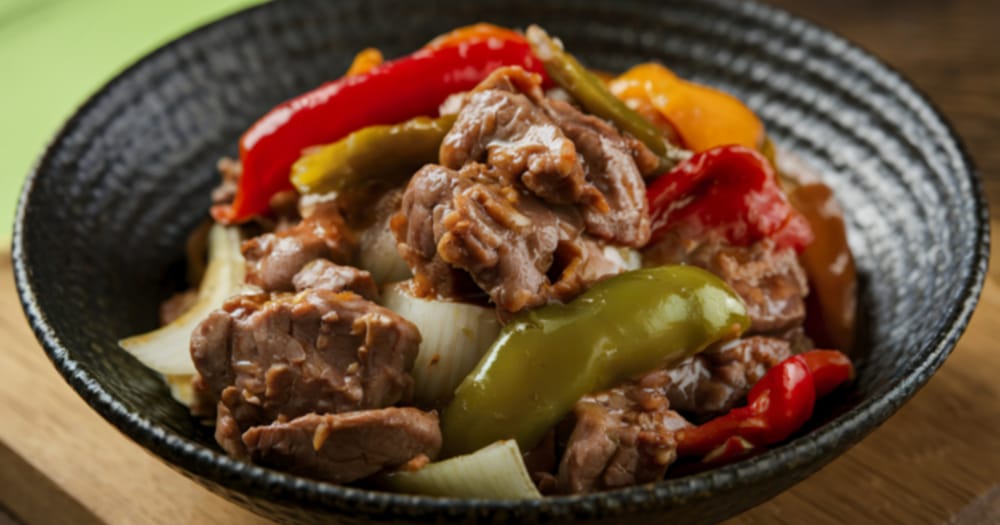
Pork Stir-Fry with Bell Peppers and Carrots
A quick pork stir-fry with colorful bell peppers, carrots, garlic, and a simple coconut aminos sauce for a fresh lunch or dinner.
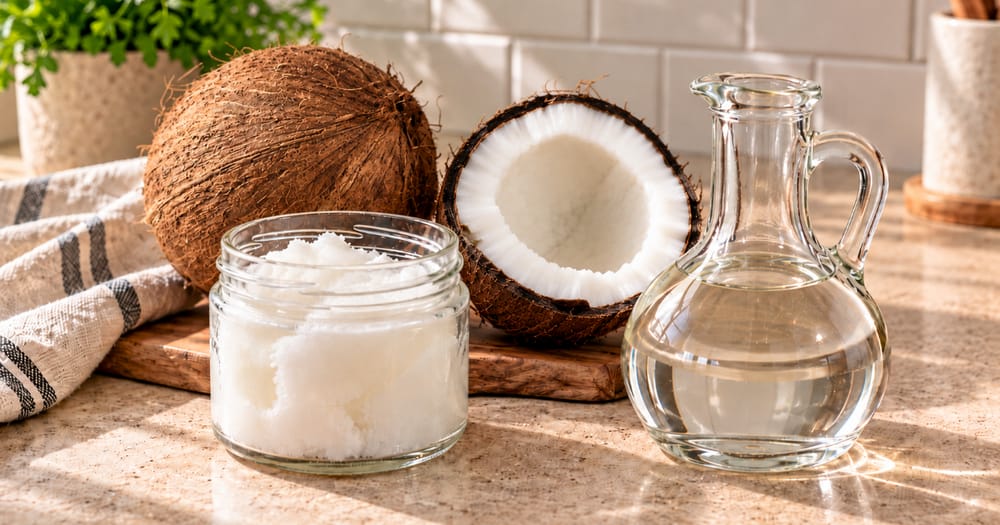
What Is Liquid Coconut Oil? Why It Stays Liquid
Regular coconut oil can turn solid when it's cool. So how does Liquid Coconut stay pourable even in the fridge? Discover what's different, how it works, and why it can make everyday cooking easier.
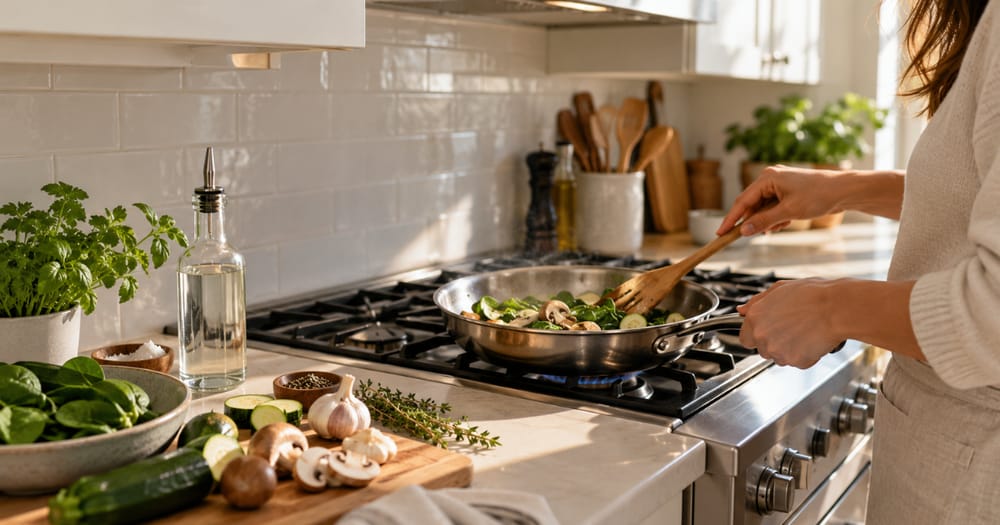
Best Oils for Everyday Cooking: How to Choose
Not sure which cooking oil belongs in your kitchen? Discover how common oils compare and learn what really matters when choosing one for the meals you already love.

Our Mission
To make better ingredient choices easier by creating thoughtful coconut products that replace conventional kitchen staples and fit naturally into the way people already cook.
Explore
© 2026 Coco-Nuts Inc. All rights reserved.
1520 55E Ave., Lachine, QC H8T 3J5, Canada

Ready to Upgrade the Way You Cook?
Join our FREE 7-Day Kitchen Upgrade Challenge and get one simple action each day to make cooking easier and everyday meals more enjoyable.
© 2026 Coco-Nuts Inc. All rights reserved.
1520 55E Ave., Lachine, QC H8T 3J5, Canada